Sustainable Weight Loss: A Metabolic Health Approach Part 2
Unpack why sustainable weight loss in midlife is about far more than “calories in, calories out.”
Sustainable Weight Loss: A Metabolic Health Approach Part 2
Unpack why sustainable weight loss in midlife is about far more than “calories in, calories out”.
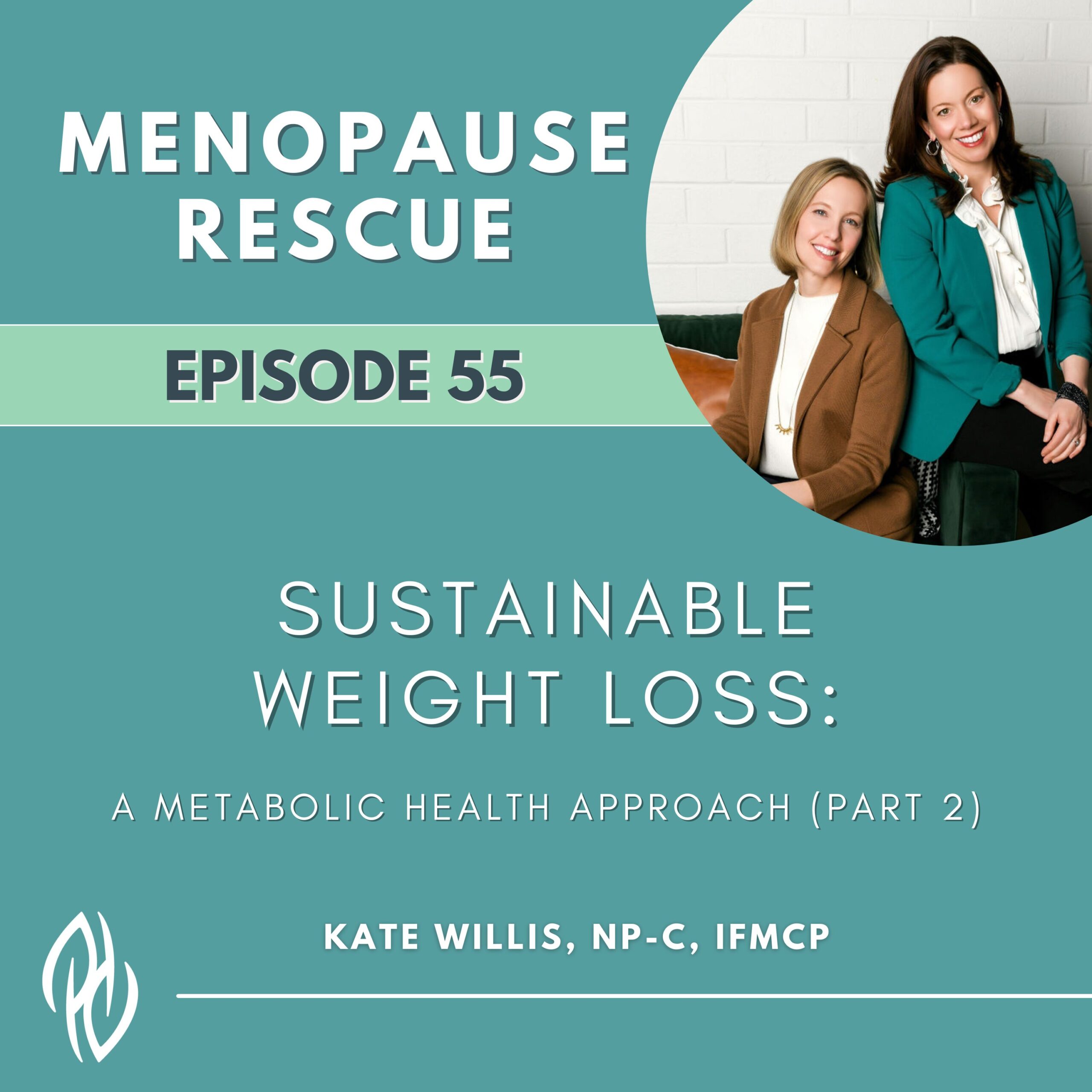
In this episode, Kate Willis, alongside Dr. Polly Watson, discusses why sustainable weight loss in midlife goes far beyond calories and willpower. Kate highlights the importance of addressing hormones, insulin resistance, gut health, muscle loss, sleep, and chronic stress together—rather than relying on a single fix.
“There is a clear connection between weight gain and menopause, and the relationship is complicated and nuanced,” says Kate Willis NP-C.
The episode covers perimenopause and menopause–related weight gain, metabolic health, and the thoughtful use of tools like GLP-1 medications and hormone therapy. Dr. Watson and Kate Willis shed light on the key takeaway that lasting weight loss in midlife requires a whole-person approach—one that prioritizes strength training, adequate protein and fiber, quality sleep, stress regulation, and personalized medical support when appropriate.
Watch The Conversation!
In this episode, Kate Willis, alongside Dr. Polly Watson, discusses why sustainable weight loss in midlife goes far beyond calories and willpower. Kate highlights the importance of addressing hormones, insulin resistance, gut health, muscle loss, sleep, and chronic stress together—rather than relying on a single fix.
“There is a clear connection between weight gain and menopause, and the relationship is complicated and nuanced,” says Kate Willis NP-C.
The episode covers perimenopause and menopause–related weight gain, metabolic health, and the thoughtful use of tools like GLP-1 medications and hormone therapy. Dr. Watson and Kate Willis shed light on the key takeaway that lasting weight loss in midlife requires a whole-person approach—one that prioritizes strength training, adequate protein and fiber, quality sleep, stress regulation, and personalized medical support when appropriate.
If you’re navigating stubborn midlife weight gain and want a science-backed, compassionate approach to improving metabolic health, this conversation offers clarity—and a realistic path forward.
Quotes:
- “About two years before our final menstrual period, the rate of fat gain doubles and lean mass declines. That shift continues until about two years after menopause.” – Kate Willis, NP
- “Women think they’ve ‘checked the fiber box’ with a gummy, but it’s usually two grams. The goal is closer to 30 to 35 grams per day.” – Dr. Polly Watson
- “Declining estrogen increases insulin resistance and drives more visceral fat. That’s a major reason weight shifts toward the abdomen in midlife.” – Kate Willis, NP
- “Hormone therapy is an incredible tool, but it doesn’t magically cause weight loss. It works best when it improves sleep, pain, and inflammation so women can support their metabolism.” – Dr. Polly Watson
Resources:
Resources: https://hormonewellnessmd.com/podcast-resources
Disclaimer: https://hormonewellnessmd.com/podcast#Disclaimer
Meet the host!

Meet the Guest Speaker!
Kate Willis, NP-C, IFMCP is a virtual nurse practitioner for Hormone Wellness MD. She’s been working in women’s health for 15 years in the field of gynecologic oncology and sexual wellness.
In 2021, Kate received her certification through the Institute for Functional Medicine (IFM), and is thankful for such solid and evidence-based training. She uses it daily in her care for patients as she works to address the root cause of disease and dysfunction in the body. As of 2024, she is also a Menopause Society Certified nurse practitioner who is ready to help with your perimenopause and menopause questions. Click here to become a patient!

Meet the host!
Meet the Guest!
Kate Willis, NP-C, IFMCP is a virtual nurse practitioner for Hormone Wellness MD. She’s been working in women’s health for 15 years in the field of gynecologic oncology and sexual wellness.
In 2021, Kate received her certification through the Institute for Functional Medicine (IFM), and is thankful for such solid and evidence-based training. She uses it daily in her care for patients as she works to address the root cause of disease and dysfunction in the body. As of 2024, she is also a Menopause Society Certified nurse practitioner who is ready to help with your perimenopause and menopause questions. Click here to become a patient!