
Mast Cell Activation Syndrome, Histamine & Hormones
Recognize common signs of histamine-related reactions, understand why diagnosis can be challenging, and explore practical treatment strategies
Mast Cell Activation Syndrome, Histamine & Hormones
Recognize common signs of histamine-related reactions, understand why diagnosis can be challenging, and explore practical treatment strategies
Mast Cell Activation Syndrome, Histamine & Hormones
Recognize common signs of histamine-related reactions, understand why diagnosis can be challenging, and explore practical treatment strategies
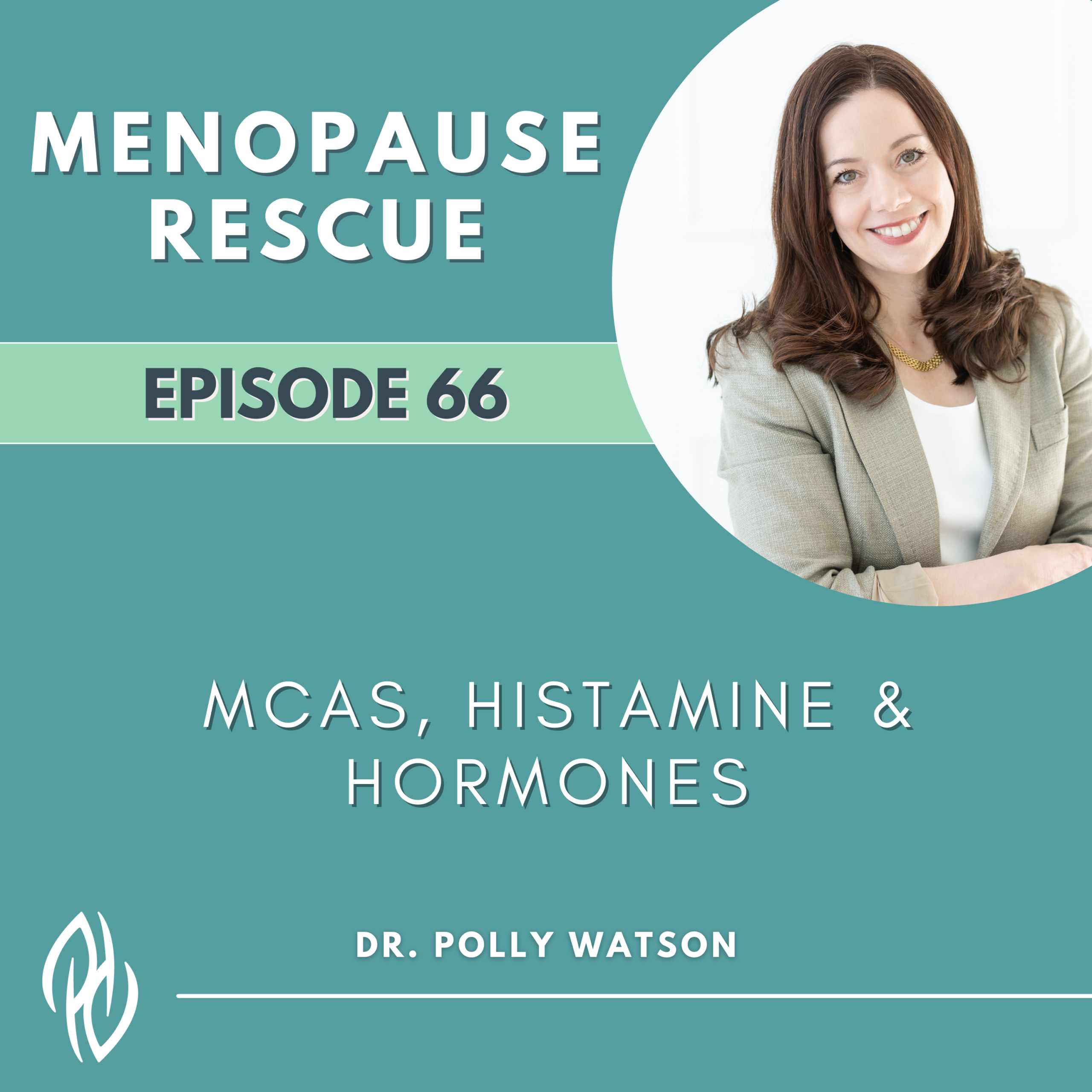
“Hormones are great. We just need to anticipate rather than react,” says Dr. Polly Watson. In this episode of Menopause Rescue, Dr. Watson explores the often-overlooked connection between hormones, histamine, and mast cell activation syndrome (MCAS) during perimenopause and menopause. She explains why some women thrive on hormone replacement therapy (HRT), while others experience headaches, flushing, anxiety, digestive issues, or worsening symptoms due to histamine sensitivity. Dr. Watson highlights the importance of recognizing mast cell activation early and taking an individualized approach to hormone therapy.
“A misinformed clinician might make things worse by increasing estrogen when the real problem is mast cell activation.” – Dr. Polly Watson
The episode covers the relationship between estrogen, progesterone, testosterone, mast cells, and histamine, along with practical strategies for diagnosis and treatment. Dr. Watson discusses how progesterone helps stabilize mast cells, why estrogen may trigger histamine release in susceptible women, and when testosterone may provide additional support. She also shares evidence-based guidance on antihistamines, nutrition, supplements, nervous system regulation, and functional medicine approaches to reducing inflammation and improving treatment success.
Watch The Conversation!
“Hormones are great. We just need to anticipate rather than react,” says Dr. Polly Watson. In this episode of Menopause Rescue, Dr. Watson explores the often-overlooked connection between hormones, histamine, and mast cell activation syndrome (MCAS) during perimenopause and menopause. She explains why some women thrive on hormone replacement therapy (HRT), while others experience headaches, flushing, anxiety, digestive issues, or worsening symptoms due to histamine sensitivity. Dr. Watson highlights the importance of recognizing mast cell activation early and taking an individualized approach to hormone therapy.
“A misinformed clinician might make things worse by increasing estrogen when the real problem is mast cell activation.” – Dr. Polly Watson
The episode covers the relationship between estrogen, progesterone, testosterone, mast cells, and histamine, along with practical strategies for diagnosis and treatment. Dr. Watson discusses how progesterone helps stabilize mast cells, why estrogen may trigger histamine release in susceptible women, and when testosterone may provide additional support. She also shares evidence-based guidance on antihistamines, nutrition, supplements, nervous system regulation, and functional medicine approaches to reducing inflammation and improving treatment success.
If you’ve struggled with hormone therapy or unexplained menopause symptoms, this episode offers valuable insights to help you better understand your body and work with your healthcare provider to develop a more effective treatment plan.
Quotes:
- “Estrogen destabilizes mast cells, and mast cells contain histamine—that’s where this connection is coming from.” — Dr. Polly Watson
- “If hormone replacement therapy made you feel worse instead of better, don’t give up—we may simply need a different strategy.” — Dr. Polly Watson
Disclaimer: https://hormonewellnessmd.com/podcast#Disclaimer
Meet the host!
She looks forward to sharing her knowledge with you to help find a solution to address the imbalance in your system and restore your health.

Meet the host!
She looks forward to sharing her knowledge with you to help find a solution to address the imbalance in your system and restore your health.